



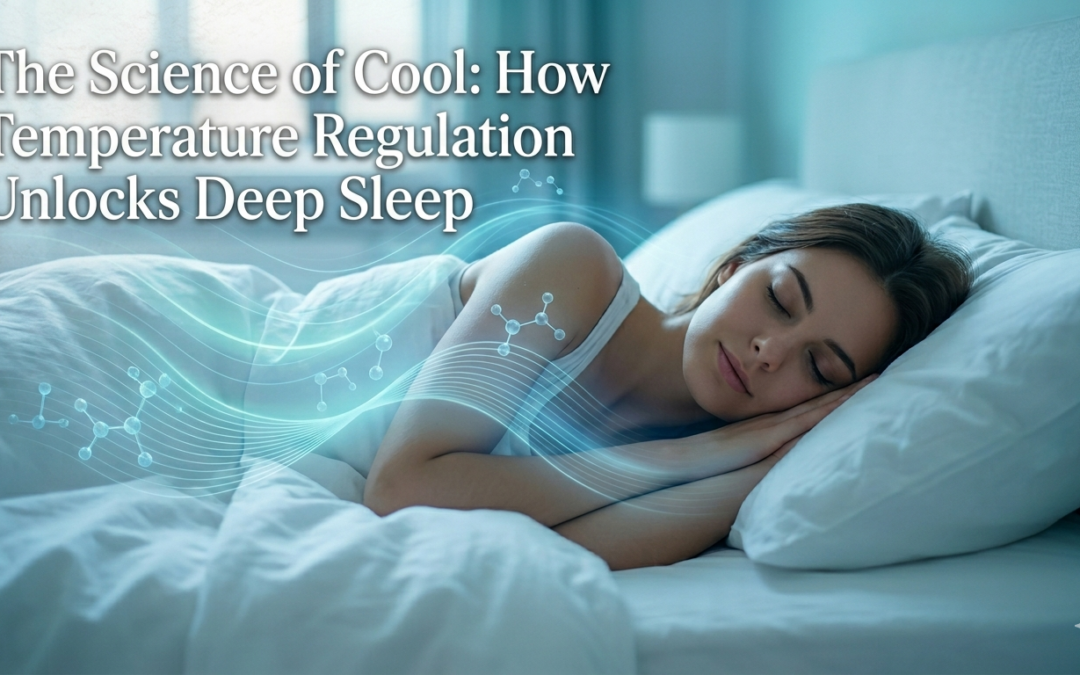
In the landscape of 2026 sleep science, we are moving beyond just “counting hours.” We are entering the era of thermal optimization. Many of us have experienced that frustrating night of tossing and turning, unable to find the “cool side of the pillow.” It turns out, that isn’t just a comfort preference—it is a biological necessity for deep, restorative sleep.
Why Your Body Needs to Chill
Your body operates on a natural circadian temperature rhythm. To initiate sleep, your core body temperature must drop by approximately 2–3 degrees Fahrenheit. This drop acts as a biological signal to your brain that it is time to transition from wakefulness into the lighter stages of sleep, eventually leading into the deep, slow-wave sleep (SWS) where physical repair occurs.
If your environment is too warm, your body struggles to dump this heat, effectively “trapping” you in lighter stages of sleep and preventing you from reaching that crucial deep-sleep threshold.
The 2026 Shift: Temperature Tech
In the last year, we’ve seen a surge in “temperature-regulating” sleep technology. This isn’t just about cranking the AC. It’s about managing the microclimate between your skin and your bedding. Here is how you can leverage temperature to unlock better rest:
- Breathability Over Density: Choose moisture-wicking, natural fibers like bamboo or specialized performance silks. These materials are designed to pull heat away from the body rather than trapping it against your skin.
- The “Cooling” Bedtime Routine: A warm shower or bath about 60–90 minutes before bed actually helps. The warmth causes your blood vessels to dilate, which releases heat from your core. When you step out of the bath, your core temperature drops rapidly, accelerating the biological signal to sleep.
- Targeted Support: If lifestyle changes like cooling mattress pads or lighter bedding aren’t enough to combat persistent overheating or sleep-onset insomnia, it is worth discussing options with a healthcare professional. Sometimes, the use of targeted sleep aids can help stabilize your nervous system, allowing your body to settle into that necessary cool-down phase without the interference of stress-induced heat.
How to Build Your “Cool” Sanctuary
You don’t need to renovate your home to experience the science of cool. Start here:
- Optimize the Ambient Temp: Aim for an ambient room temperature between 60°F and 67°F (15°C–19°C).
- Strategic Ventilation: If you can’t use AC, use a fan to create airflow across your body, which aids in evaporative cooling.
- Foot Exposure: Interestingly, exposing your feet and hands—which are prime heat-release points due to unique vascular structures—can help lower core temperature faster.
The Bottom Line
Deep sleep is the bedrock of your mental and physical health in 2026. By mastering the science of thermal regulation, you are doing more than just getting comfortable—you are facilitating the specific physiological processes required for your brain to clean itself and your muscles to recover.