



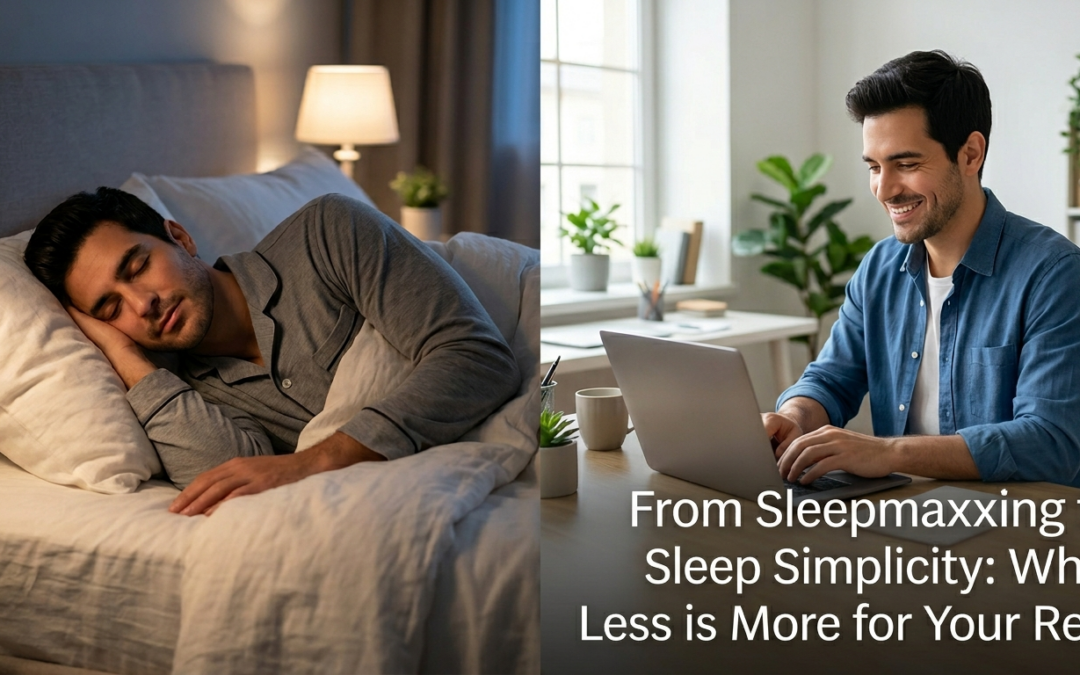
In our hyper-connected world of 2026, it seems we have a gadget or an app for everything—including our shut-eye. You’ve likely heard the term “sleepmaxxing” buzzing around social media and wellness circles. It’s the trend of treating sleep like an extreme sport, utilizing high-tech rings, bedside radar sensors, and complex data-tracking apps to obsess over every minute of REM and deep sleep.
While technology can offer valuable insights, there is a growing concern that this “data-first” approach is backfiring. Instead of feeling refreshed, many of us are waking up more anxious than when we went to bed.
The Rise of “Orthosomnia”
When we turn sleep into a performance metric, we invite “orthosomnia”—a preoccupation with achieving “perfect” sleep. If your sleep tracker tells you your recovery score is low, you might start the day already feeling drained, even if you felt fine when you woke up.
The paradox is simple: the harder you try to force perfect sleep, the more elusive it becomes. Stressing over a data point is the enemy of the relaxation required to drift off.
Why Simplicity is Your Best Strategy
True restorative sleep isn’t found in a spreadsheet; it’s found in biology and consistency. Returning to the basics allows your nervous system to downshift naturally. Here is why choosing simplicity often yields better results than tracking every heartbeat:
- Trust Your Internal Feedback: Your body is the best judge of your sleep quality. If you wake up feeling alert, energized, and ready for the day, you’ve slept well. Don’t let a device tell you otherwise.
- Reduce Tech Stimulation: By removing the “tracking” aspect, you reduce the time you spend engaging with screens before bed. Clearing your nightstand of unnecessary gadgets creates a more tranquil, distraction-free environment.
- Ease the Mental Load: Letting go of the need to “optimize” your sleep frees up mental bandwidth, allowing your brain to switch into “off” mode more effectively.
Finding Balance: The Modern Approach
This doesn’t mean you have to throw away your tech. It means changing your relationship with it. If you choose to use sleep aids or monitoring tools, view them as support rather than judges.
If you find yourself stuck in a loop of restless nights and frustration, look toward simple, foundational habits:
- Keep it cool: Focus on a room temperature that allows your body to reach a comfortable core temperature.
- Stick to a rhythm: Go to bed and wake up at the same time, even on weekends.
- Use support when needed: When your biological rhythm is disrupted by stress, travel, or a shift in schedule, sleep aids can serve as a gentle “reset button” to help you get back on track.
The Bottom Line
Your worth is not defined by your sleep score. Reclaiming your rest is about creating a sanctuary where you feel safe, comfortable, and ready to let go of the day’s pressures. Sometimes, the most sophisticated thing you can do for your health is to simply turn off the noise and trust your body to do what it was designed to do: rest.